where-to-stay
Mestre or Venice Island: When the Cheaper Base Actually Costs You More
Mestre looks cheaper than Venice Island on paper, but transit time, luggage logistics, and tourist tax shift the real math. Here is when the savings hold up and when they vanish.
Venice has two prices: the one on the hotel page and the one you actually pay after trains, porters, tourist tax, and lost time. Mestre wins the first number almost every time. Venice Island wins the second one more often than budget travelers expect.
This guide is for visitors deciding whether the cheaper nightly rate in Mestre survives contact with the real trip.
Quick Verdict
Stay in Mestre if you are visiting for two or more nights, traveling light, comfortable with a 25 to 45 minute door-to-door transit each way, and fine ending most evenings by 10 to 11 PM. A 3-star room at 80 to 115 euros a night, plus a 30 to 50 percent lower tourist tax, leaves real savings even after transit costs.
Stay on Venice Island if you have one or two nights total, you are arriving with heavy luggage, you want late dinners, early morning empty-piazza walks, or you are paying for a trip you will not repeat soon. The premium over Mestre is real (often 60 to 120 euros per night more) but it buys back time and removes the last-train anxiety.
Skip Mestre entirely if you only have one night in Venice. The setup cost of getting on and off the island twice eats the savings.
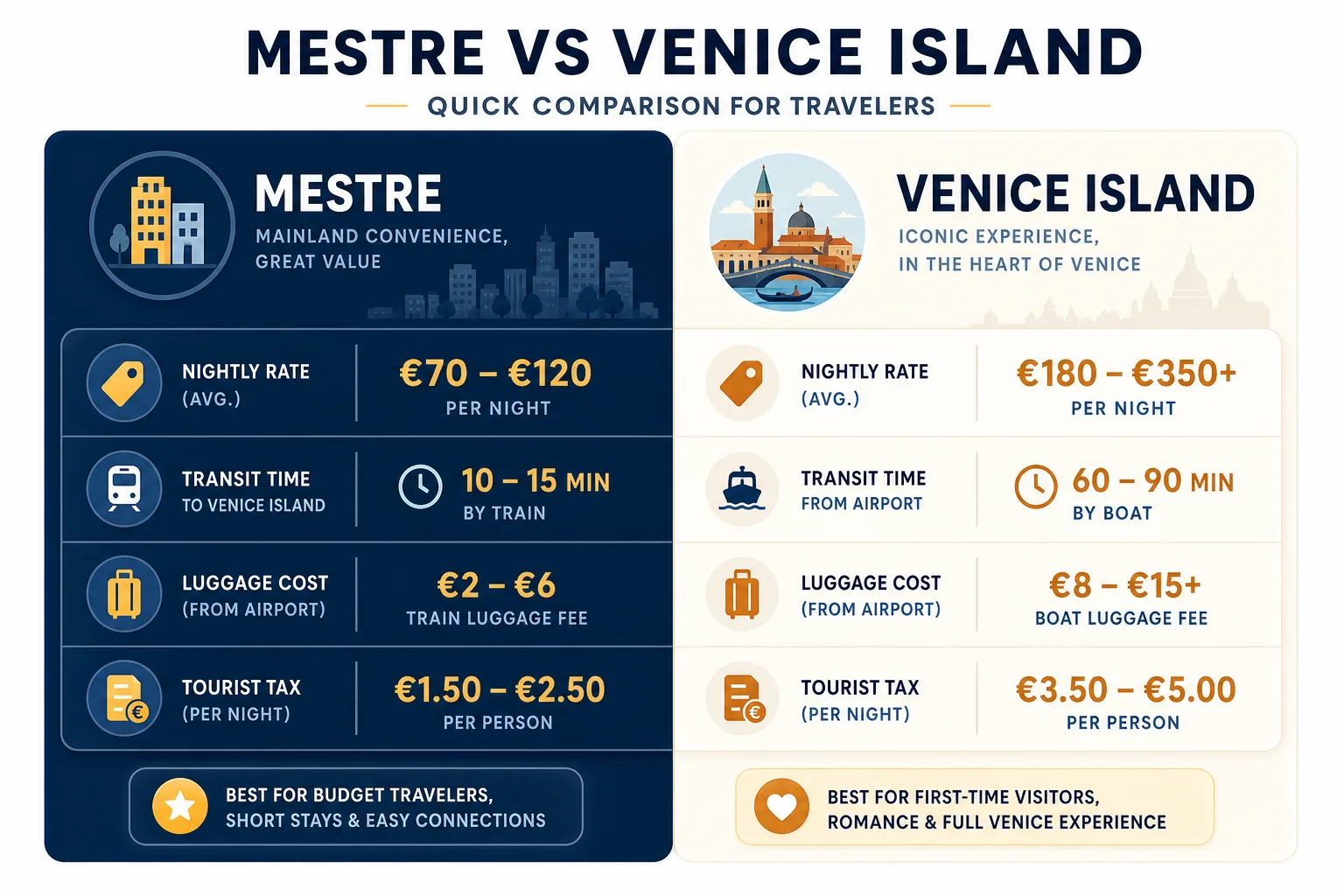 Infographic comparing accommodation rates, travel times, and additional costs between Mestre and Venice Island.
The Main Friction Problem
The Mestre versus Venice Island choice is not really about hotel price. It is about four frictions that the nightly rate hides.
1. Daily commute time and last-train risk. Regional Trenitalia trains run between Venezia Mestre and Venezia Santa Lucia roughly every 10 minutes, take 10 minutes, and cost 1.50 euros one way. That sounds trivial. In practice, your door-to-door time from a Mestre hotel to, say, the Rialto area is closer to 35 to 50 minutes once you add the walk to Mestre station, waiting, the train, and a vaporetto or a walk on the island side. Multiply by two trips a day, and you have spent 90 minutes in transit. The last-train question matters too: service thins late, and if a long dinner runs past midnight you may be looking at a taxi back to the mainland.
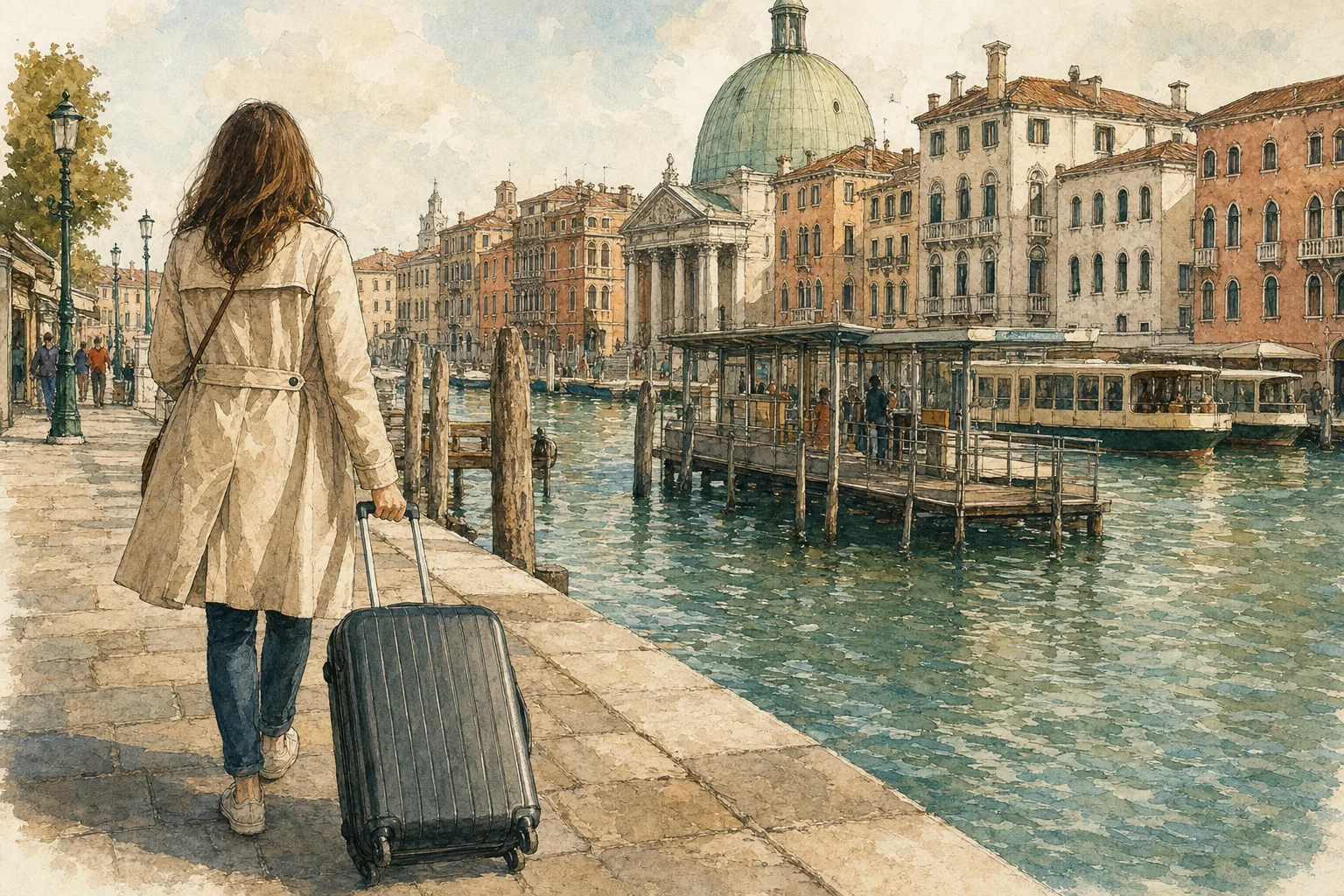
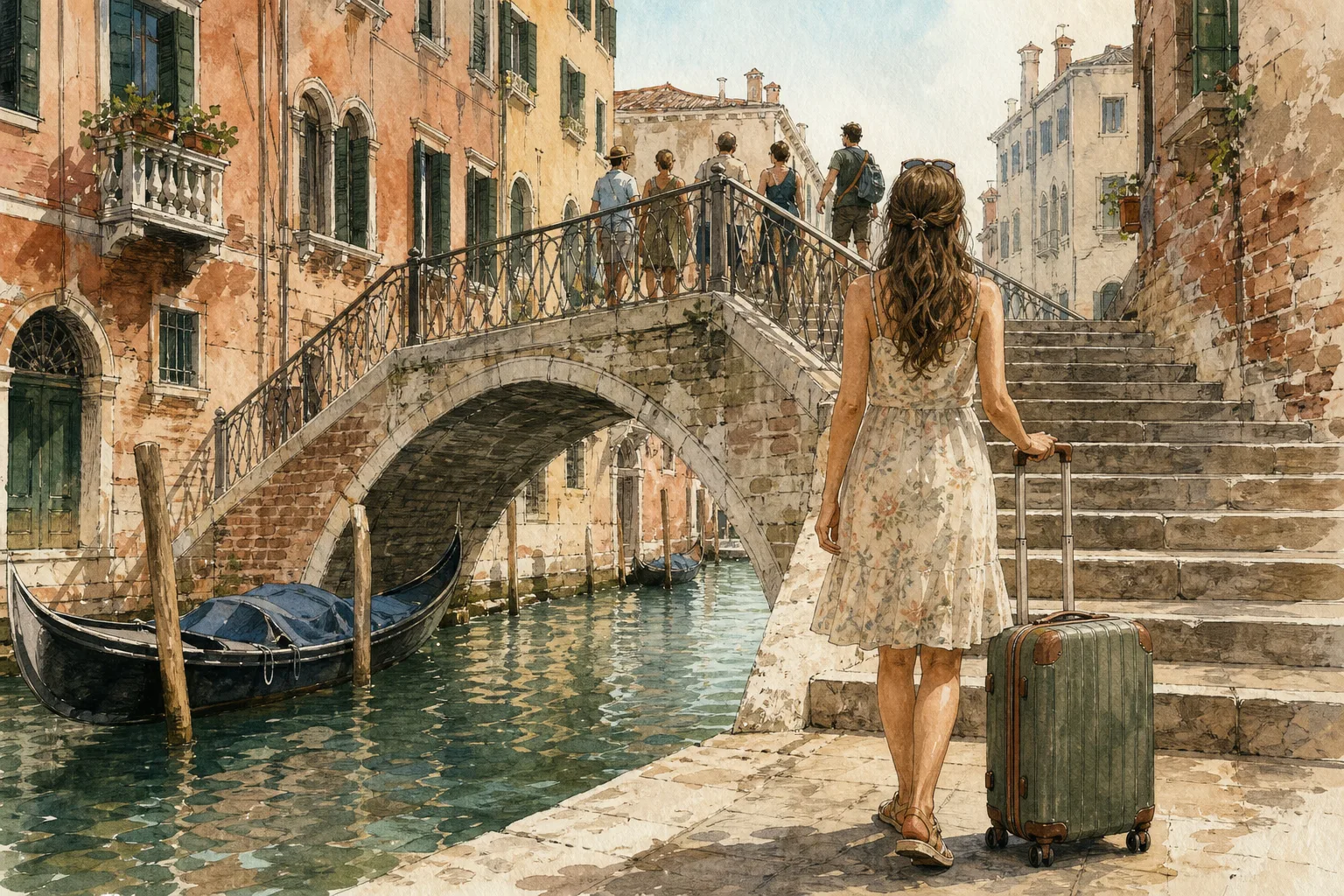
2. Luggage transfers across bridges. Venice Island is not luggage-friendly. There are step bridges, narrow alleys, vaporetto stops with limited space, and almost no elevators. If your hotel is more than a few minutes from Santa Lucia or a vaporetto stop, you are either paying a porter or dragging a wheeled bag up and down dozens of bridge steps. Mestre, by contrast, is a normal mainland city: flat streets, elevators, a station you can roll a suitcase out of.
3. Real cost after transit and time. The headline gap (Mestre 3-star at 80 to 115 euros, Cannaregio at 150 and up) shrinks fast when you add train tickets, occasional vaporetto rides at 9.50 euros each, and the value of lost hours.
4. Evening atmosphere access on the island. Venice empties out in the evening when day-trippers leave. If that quiet, lit-canal version of the city is part of why you are going, Mestre puts a 10-minute train ride between you and it every single night, and a real planning constraint on how late you stay.
Friction Table
A two-night trip for two travelers, arriving by train at Venezia Santa Lucia, makes the comparison concrete.
| Variable | Mestre (3-star) | Venice Island (Cannaregio, 3-star) |
|---|---|---|
| Nightly hotel rate | 80 to 115 EUR | 150+ EUR |
| Tourist tax | 30 to 50 percent lower than island rate | Full island rate |
| Day-tripper access fee | Exempt with cda.ve.it QR registration | Exempt as overnight guest |
| Transit from arrival station to hotel | 10-min train + walk, or 15 to 30-min ACTV T1 bus/tram at 1.50 EUR in advance | Walk or single vaporetto at 9.50 EUR |
| Daily transit to island sights | 1.50 EUR train each way, 10 min | None, you are already there |
| Vaporetto needs | Optional, pay per ride or 24h pass at 25 EUR | Often optional, walkable core |
| Luggage handling | Roll-on, flat streets, elevators | 6 to 12 EUR official porter at Santa Lucia, 25 to 50+ EUR for trasbagagli to hotel, or 60 to 120+ EUR water taxi |
| Last-train risk | Yes, plan evenings around it | None |
| Early morning empty-Venice access | Hard, requires early train | Easy, step outside |
| Typical 2-night total premium for island | Baseline | Roughly 120 to 250 EUR more before luggage and transit |
The premium for staying on the island is real but smaller than the sticker comparison suggests, especially once luggage and the ACTV tourist pass enter the picture.
Who Will Feel the Friction Most
Single-night visitors. The fixed cost of getting on and off the island twice (luggage handling, train fares, time) is the same whether you stay one night or four. Spread across one night, Mestre rarely wins. Spread across four, it usually does.
Travelers with heavy or multiple suitcases. If you are arriving with two big bags each, the luggage math gets ugly on the island, but it also gets ugly twice if you base in Mestre and day-trip with bags. Solve this by leaving bags at Mestre and arriving on the island light, not the other way around.
Late-evening eaters. Italian dinner runs late. If you want to linger at a Cannaregio bacaro until 11:30 PM, factor in the last-train check every single night.
Mobility-limited travelers. Bridge steps are unavoidable on the island. Mestre is flatter and easier to navigate, but the Santa Lucia arrival and the vaporetto network still involve standing and steps. Neither base is fully accessible, but Mestre is the less punishing daily environment.
First-time visitors with two or fewer nights. The "I came all this way" regret risk is highest here. The island premium often buys back enough evening hours and morning light to be worth it.
How to Reduce the Friction
If you choose Mestre, you can claw back most of what the cheap rate would otherwise cost:
- Book within 10 minutes walk of Venezia Mestre station or directly on the ACTV T1 tram line. Anything further turns every trip into a three-leg journey.
- Register at cda.ve.it within the booking window to get your day-tripper fee exemption QR code. Skipping this risks a 50 to 300 EUR fine on the 60 peak days between April 3 and July 26, 2026.
- Buy ACTV tickets in advance, not on the bus. Onboard is 3.00 EUR versus 1.50 EUR in advance.
- Do the math on a tourist pass. A 48-hour ACTV pass at 35 EUR covers Mestre buses, the tram, and vaporetti. If you expect more than three vaporetto rides plus a few tram trips, it pays off.
- Cluster your island time. Two long days on the island beat four short ones if you are commuting from Mestre. Pack a small day bag and stay out from morning through dinner.
- Check the last train for your dates before booking, and decide in advance what your taxi-back-to-Mestre budget is.
If you choose Venice Island, the equivalent moves are:
- Pick Cannaregio if budget matters. Lowest typical starting rate on the island (around 150 EUR) and closest to Santa Lucia, which cuts luggage friction.
- Use the official porter at Santa Lucia (6 EUR for one bag, 12 for two) for short walks, or book a trasbagagli (25 to 50+ EUR) in advance for distant hotels. Avoid arriving after 5 to 6 PM if you can, to dodge the late surcharge.
- Skip the water taxi unless luggage or mobility forces it. At 60 to 120+ EUR one way, it is almost always overkill for a single arrival.
- Stay light. One bag per person changes the island math more than any other single decision.
Better Alternatives
If neither Mestre nor a mid-range island hotel fits, two reframes work better than splitting the difference:
For very tight budgets on a short trip, a single night in Cannaregio (around 150 EUR plus tax) beats two nights in Mestre with island commutes for most first-time visitors. You see more of Venice and pay less in total transit.
For longer stays of 4 nights or more, look at Santa Croce (around 170 EUR starting) or Dorsoduro (around 180 EUR). They are quieter than San Marco, still on the island, and the per-night premium amortizes well across more nights. San Marco at 220+ EUR is rarely the right pick for budget-led travelers; you are paying for an address, not an experience the other sestieri cannot give you.
For travelers who specifically want a real city, not a tourist one, Mestre on its own merits is a reasonable base, but be honest that you are choosing a mainland Italian city with train access to Venice, not a budget version of Venice.
Decision Checklist
Before you book, run through this list:
- How many nights total? (1 night = lean island, 3+ nights = Mestre math improves)
- How heavy is your luggage? (2+ large bags = Mestre or a Cannaregio hotel within 5 minutes of Santa Lucia)
- What time do you typically eat dinner? (Past 10 PM regularly = island removes friction)
- What time do you arrive at Santa Lucia? (After 6 PM with bags = budget for the late porter surcharge or pre-book)
- Are your dates inside April 3 to July 26, 2026? (If yes, register at cda.ve.it regardless of base)
- How many vaporetto rides do you actually need? (3+ = price an ACTV pass at 25/35/45 EUR)
- Is your Mestre hotel within 10 minutes walk of the station or on the T1 line?
- What is the last train back to Mestre on your dates?
- Have you priced the island option in Cannaregio specifically, not just San Marco?
- Total trip cost including transit, porters, and tourist tax (not just nightly rate)?
If more than two of those answers point toward island convenience, the Mestre savings are probably illusory for your trip.
FAQ
Is staying in Mestre instead of Venice worth the savings? For two or more nights with light luggage and no late-evening plans on the island, Mestre usually still saves money even after train fares and lost time. For a single night, or if you want late dinners in Venice, the savings often disappear once you add transit, luggage handling, and an earlier return to the mainland.
How late do trains run between Venezia Santa Lucia and Mestre? Regional Trenitalia trains between Venezia Santa Lucia and Venezia Mestre run frequently into the late evening, but service thins out after midnight. If you plan to stay on the island past 11 PM, check the last train for your specific date before booking Mestre, and budget for a taxi as a backup.
Do I have to pay the Venice day-tripper access fee if I sleep in Mestre? Overnight guests in Mestre are exempt from the day-tripper fee, but you must register your hotel details at cda.ve.it to obtain an exemption QR code. Without it, you risk a fine between 50 and 300 euros on the 60 designated peak days between April 3 and July 26, 2026, from 8:30 AM to 4:00 PM.
How much does luggage handling cost if I arrive by train and stay on the island? Official porters at Venezia Santa Lucia charge 6 euros for one bag and 12 euros for two. Private wheeled porters (trasbagagli) who take luggage directly to your island hotel cost 25 to 50 euros or more, with a 10 to 15 euro surcharge after 5 or 6 PM. A private water taxi to a canal-side hotel runs 60 to 120 euros or more one way.
Which Venice Island neighborhood is cheapest if I skip Mestre? Cannaregio has the lowest typical starting rates on the island at around 150 euros per night, followed by Santa Croce around 170 and Dorsoduro around 180. San Marco is the most expensive at 220 euros and up. Cannaregio is also the closest island neighborhood to the train station, which reduces luggage hassle.